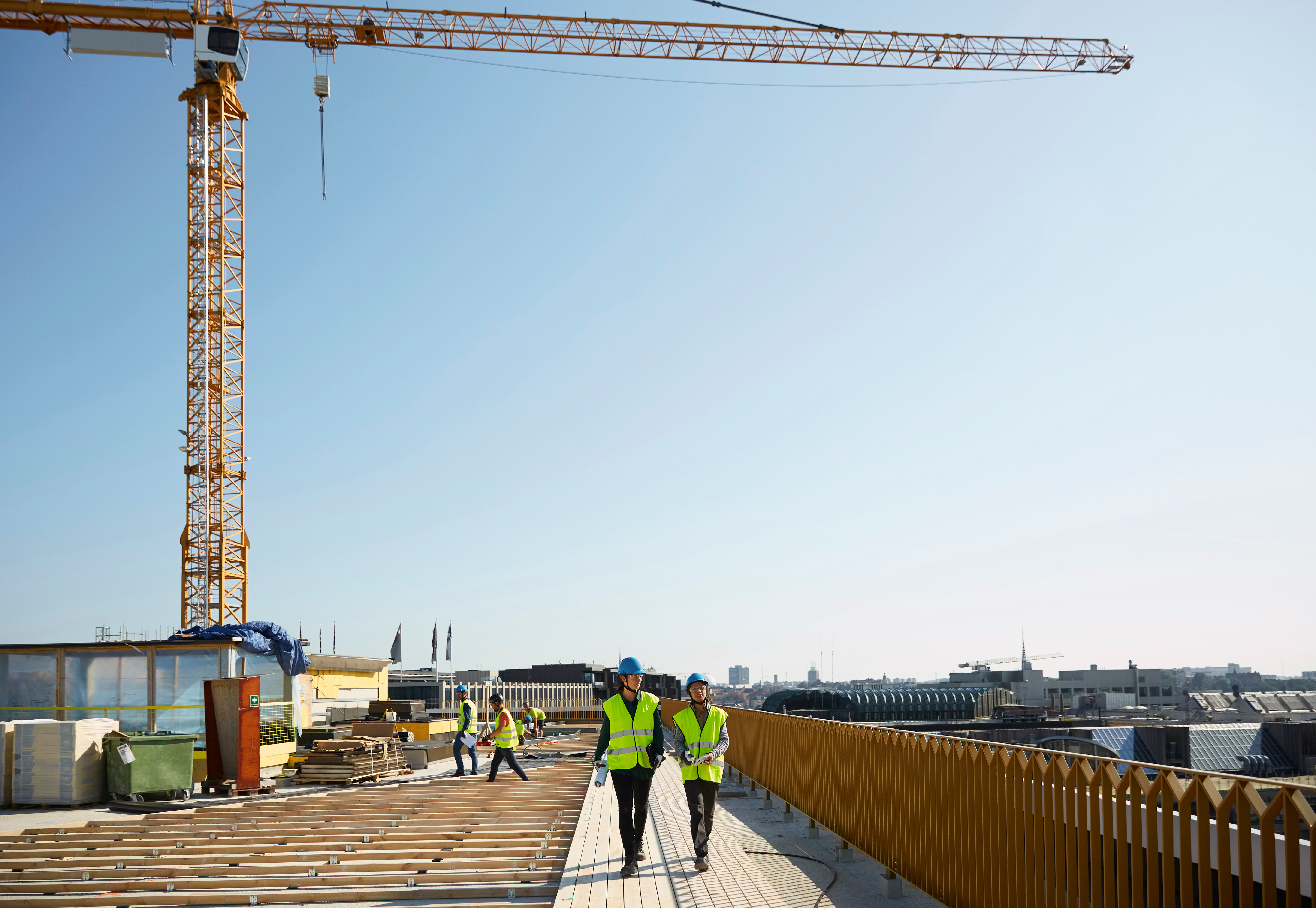
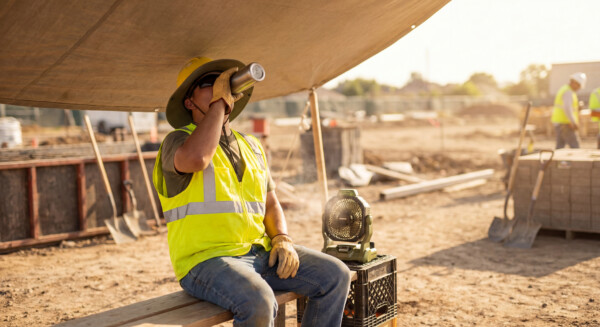
 Working on a construction jobsite exposes workers to significant heat‑stress hazards—especially during summer, heat waves, or when tasks require heavy exertion in direct sun or inside hot enclosures. Heat stress can reduce productivity, increase injury risk, and in severe cases cause heat illness (heat cramps, heat exhaustion, heat stroke), which is life‑threatening.
Why heat stress matters on construction jobsites
Construction work combines high physical exertion, environmental exposure, and personal risk factors, so supervisors should confirm accessible water and shaded rest areas, assign a heat watcher for each shift, and review schedules and shift start times to avoid peak heat where possible. They should ensure new or returning workers follow acclimatization procedures, refresh training on recognizing heat illness and emergency steps, and maintain quick access to first aid and EMS. Lifting, carrying, repetitive tasks, heavy PPE, direct sunlight, reflective surfaces, confined spaces, hot equipment, illness, certain medications, and poor hydration all increase metabolic or ambient heat and raise individual risk.
Recognize heat illness early
Heat illness progresses from cramps to exhaustion to heat stroke. Early signs include muscle cramps, weakness, headache, nausea, dizziness, and clammy skin. Heat stroke is a medical emergency marked by confusion, loss of consciousness, very high body temperature, and hot or dry skin. Prompt recognition and action save lives.
Prevent heat stress by creating an action plan that defines temperature thresholds, work/rest cycles, buddy systems, and escalation to medical care. Provide shade structures and shaded rest areas, ventilate enclosed spaces with fans or air movers, and sequence work so heavy tasks occur during cooler hours. Shorten work intervals and increase breaks as conditions worsen, require progressive acclimatization for new or returning workers, supply cool water and electrolyte options at convenient locations, and assign a heat‑watcher each shift to monitor crews and enforce breaks. Simple, low‑cost measures such as combining shade with fans can significantly lower radiant heat load and improve worker comfort.
At the first signs of heat illness, stop work and move the affected worker to shade or a cool environment. Loosen clothing, cool with water or ice packs, and provide fluids for conscious workers. If a worker is confused, unconscious, or doesn’t improve quickly with first‑aid cooling, call emergency medical services immediately. After the incident, document what happened, investigate root causes, and update the heat action plan and training accordingly.
Heat stress is a predictable, preventable hazard when addressed proactively. Develop a site‑specific heat action plan, train crews and supervisors, ensure hydration and shade, and monitor conditions during hot periods.
For help building a heat‑risk program, jobsite checklists, or training materials, contact an MMA advisor for tailored solutions and implementation support.